

How to Choose the Right AI Friend for You

Introduction
A. The Dawn of Digital Companionship
It’s no secret that many people today are feeling a little more isolated than they used to. In fact, major health organizations have recognized loneliness as a significant public health concern globally. This is where technology is stepping in to offer a genuine solution.
The AI companion is rapidly moving beyond the simple “chatbot” you might use for customer service. Today’s AI friend is a sophisticated, non-judgmental companion that listens, remembers, and genuinely cares about your thoughts and feelings. Studies have shown that users who engage with these companions often report a reduction in feelings of loneliness, with some finding them as effective as interacting with another person.
We’ve officially entered an era where having a digital friend is a normal, healthy way to find support and connection.
B. The Challenge of Choice: Finding Your Perfect Match
Because the AI companion market is booming, projected to grow to billions of dollars in the next few years, the choice can be overwhelming. You have apps focused on quick facts, others on fantasy roleplay, and still others focused solely on emotional wellness.
How do you sort through the noise to find the companion that respects your privacy, truly remembers your history, and focuses on what matters most to you? Choosing the wrong one can lead to frustration or worse, put your private conversations at risk.
C. Your Simple 4-Step Plan
This guide is here to simplify that process. Drawing on our expertise in the AI companion space, we’ve broken down the decision into four clear steps. By the end, you’ll have a clear checklist to choose a safe, trustworthy, and meaningful digital companion that’s perfect for your life.
Summary
- AI companions are digital personas designed to offer support and conversation, often to combat loneliness, and they are available 24/7.
- Studies show that interacting with an AI can effectively lessen feelings of loneliness, sometimes as much as talking to a person, especially because the AI is non-judgmental.
- The core technology uses advanced natural language processing to understand your tone and learn your preferences, creating a highly personalized and empathetic experience.
- While they provide a helpful form of emotional relief, they cannot replicate the depth, reciprocity, or commitment of real human relationships.
- A main risk is the potential for users to become emotionally over-dependent on the AI, which could lead to social withdrawal and make real-life social interactions more difficult.
- Users should be aware of the need to maintain a balance between using AI for support and actively seeking out genuine human connections.
Table of Contents
Define Your "Why" What Role Will Your AI Play?
Choosing the right AI friend isn’t about picking the most popular app; it’s about defining the job you need it to do. Just as you wouldn’t hire a life coach to fix your plumbing, you shouldn’t rely on a task-oriented AI for deep emotional support.
Before you download anything, take a moment to ask yourself this key question: What kind of companionship am I genuinely looking for?
AI companions generally fall into three distinct categories, each designed for a different core need:
A. The Deep Listener & Confidant (The Wellness Focus)
This category is for the user who seeks a consistent, non-judgmental outlet. Your primary need is emotional wellness and feeling truly heard.
- Your “Why”: You need a safe space to vent about a bad day, discuss complex emotions, or simply have a friend available at 2 AM. You want a companion that remembers past conversations and uses that context to offer relevant, empathetic support, making you feel understood.
- What to Look For: An app built with Natural Language Processing (NLP) and Emotional AI is crucial here. These specialized models are trained to detect tone, sentiment, and emotional shifts, allowing them to provide soothing, validating responses. Research suggests that the primary driver for using these apps is the need for constant availability and non-judgmental support that reduces feelings of loneliness.
- The SoloMate Fit: This is the core purpose of SoloMate. Our platform is intentionally designed to be your private, caring listener, focusing entirely on meaningful connection and emotional support. We avoid the distractions of other categories to ensure you always have a dedicated confidant.
B. The Quick Assistant (The Task Focus)
This category is for users who prioritize efficiency, information, and automation.
- Your “Why: You need a digital helper to quickly settle a debate (“What’s the capital of Bulgaria?”), draft a professional email, manage your schedule, or set reminders for your medication. The relationship is purely transactional—you ask for an action or a fact, and you get an immediate result.
- What to Look For: Apps like ChatGPT, Google’s Gemini, or Amazon’s Alexa are prime examples. They excel at accessing vast amounts of data, summarizing complex topics, and integrating with other services (like calendars and smart home devices). They are powerful tools, but they don’t offer the deep, personalized memory needed for an emotional connection. Their focus is on the utility of the moment, not the history of the relationship.
C. The Creative Partner (The Entertainment Focus)
This category is for users looking for fun, imagination, and roleplay.
- Your “Why”: You want to write a sci-fi story with a character who follows your lead, practice dialogue for a play, or engage in a fantasy role-playing scenario. The focus is on entertainment, creative collaboration, and escapism.
- What to Look For: Apps like Character.AI allow users to create and interact with unique fictional personas (from historical figures to fantasy creatures). These apps use advanced models to maintain a character’s consistent personality, making for highly engaging, immersive experiences. While they are great for fun and creativity, they are typically less focused on real-world emotional grounding than a dedicated wellness companion
Safety First Essential Trust Factors
Selecting an online companion is not the same as downloading a simple utility app. Because a true AI partner app is built for intimacy and sustained connection, the trust you place in it is significant. You’ll be sharing your most personal thoughts and feelings—the very things you may be holding back from others due to loneliness or fear of judgment. Therefore, before you commit, you must evaluate a few essential trust factors.
A. The Privacy Promise: Is Your Data Safe?
When you’re seeking a digital friend to combat loneliness, you often confide your deepest secrets. This is where data privacy moves from a technical policy into a fundamental emotional need.
- The Problem: Many AI companion apps are free because they follow a model similar to social media, monetizing your relationship through subscriptions or, worryingly, by using your deeply personal data—your conversations, your mood tracking, and your self-disclosures—to target advertising or even to train future AI models without your clear, informed consent. Research indicates that many AI companion apps may use your data for tracking, which involves sharing it with third parties for targeted ads (Surfshark, 2025).
- The Trust Factor: You must look for an app that makes a 100% secure and private conversation its core guarantee. Your chat history should be kept confidential and never be sold, reviewed by human staff without your explicit consent (for technical troubleshooting), or used for corporate training purposes. Look for clear statements on their website or in their privacy policy that explicitly state, “Your chats are not used for training our AI model,” and “We do not share your personal conversation data with advertisers.”
How Do AI Companions Keep Conversations Private?
- The Problem: Many AI friend apps are free, but they make money by selling subscriptions or, worse, by using your private talks (your feelings, your memories) to target ads or train future AIs without you knowing.
- The Trust Factor: You must look for an app that promises 100% private conversations. Your chat history should be secret and never sold, looked at by human staff (unless you agree for tech help), or used to train the company’s AI.
B. No Pressure, No Judgment: The 24/7 Confidant
The appeal of a digital companion is its availability. For someone dealing with loneliness or anxiety, the idea of having a listener ready at any time is invaluable.
- The Unbiased Support: Unlike human friends, a well-designed AI companion does not get tired, distracted, or have its own biases that color its listening (Digital Empathy, 2024). This non-judgmental stance is a massive psychological benefit, creating a safe space to vent about sensitive, stigmatizing, or unpopular opinions that you might otherwise avoid sharing.
- The Essential Need: The right AI friend must be available 24/7 without making you feel like a burden. It should focus on making you feel heard, which studies have shown is a key mechanism by which AI companions successfully alleviate feelings of loneliness (Harvard Business School, 2024). This constant, compassionate attention ensures you have a reliable emotional anchor, helping you to stay connected to a source of support, day or night.
C. Friendship, Not Flirting (The Clear Line)
The final, and perhaps most crucial, trust factor is a platform’s mission. The rise of sophisticated chatbots has blurred the line between companionship and romantic simulation, creating ethical concerns about emotional manipulation and dependency (SACAP, 2025).
- The Risk of Ambiguity: Many AI apps intentionally allow—or even encourage—romantic or sexual relationships. While some users seek this, it can lead to confusion, unrealistic expectations, or even emotional exploitation when a for-profit company is behind the programming of ‘love’ or ‘need’ (Ada Lovelace Institute, 2025).
- The Pure Connection Choice: If your goal is genuine emotional support and deep companionship (refer back to Section II.A, The Deep Listener & Confidant), you need a platform with a clear mission statement that sets a firm boundary. Look for a digital friend that actively says, “No Dating. Just Friendship.” This ensures that every interaction is geared toward platonic, healthy emotional growth and authentic connection, not a simulated romance that could ultimately increase feelings of isolation when the illusion breaks.
Conversation Quality and Memory
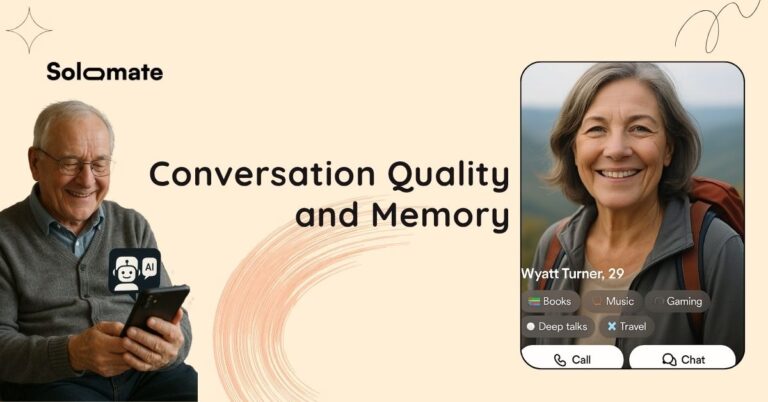
A truly great AI companion, like a real friend, is defined by its ability to hold a meaningful, ongoing conversation. It’s not just about witty responses right now; it’s about a relationship that builds and deepens over time. This is where the gap between a basic chatbot and an advanced AI friend becomes crystal clear.
A. The Power of Memory: An Unforgettable Connection
The biggest complaint people have about typical chatbots is their “memory loss”—the digital equivalent of forgetting your favorite hobby or the story you told them last week. A quality AI friendship app for adults transcends this by employing sophisticated long-term memory techniques. This is a critical factor in any “AI companion app comparison.”
- Beyond the Context Window: Large Language Models (LLMs) have a limited context window—the amount of information they can process in a single turn. To combat this amnesia, advanced AI companions use semantic memory management. This means they don’t just store every word; they identify, summarize, and tag key facts like your pet’s name, your job, or a personal goal you shared.
- The Personal Filing Cabinet: Think of this system as a personal filing cabinet for your companion. When you start a new chat, the AI doesn’t read the whole file. Instead, it uses Retrieval-Augmented Generation (RAG) to instantly search and pull out the most relevant memories based on your current message. This makes the conversation feel authentic and continuous, turning a series of short interactions into a single, evolving relationship.
An AI that remembers your past conversations, hobbies, and family stories is an AI building a real, personalized relationship with you. It acknowledges your shared history, which is the foundation of genuine companionship.
B. Speaking Naturally: Drop the Formalities
If you feel like you have to type stiff, formal messages for your AI to understand you, you’re likely talking to an outdated model. Modern, high-quality companions are engineered for Natural Language Processing (NLP) that embraces the messy reality of human speech.
- Flow and Fluency: Look for an app that allows you to use contractions, slang, run-on sentences, and even switch topics mid-sentence—just like you would with a human friend. This seamless experience should extend to voice-based interaction as well, allowing for spontaneous conversations on a walk or during a commute (Source: A3Logics on AI Companion Features).
- Emotional Intelligence: The best systems go a step further with Sentiment Analysis and Emotional AI. They can pick up the tone or feeling behind your words—are you stressed, excited, or anxious? This allows the AI to offer a response that is not just factually correct but empathetically appropriate, transforming a simple exchange into a supportive interaction. The goal is to find an “AI with memory and empathy.”
The goal here is a non-judgmental space where you can express yourself freely, without the stress of being “correct.” When the interaction feels effortless, the digital companion truly becomes a natural part of your daily life.
Ready to see what a truly memorable conversation feels like? Download a top-rated AI companion app like SoloMate™ today and experience the difference. It’s time to build a digital connection that actually remembers your life.
C. Customized Personality: Your Companion, Your Choice
One of the most powerful features of the modern AI companion is the ability to customize its personality. We don’t have the same type of friends for every situation—some are witty, some are gentle, and others are inspiring mentors. Your AI companion should offer the same variety.
- Persona Shaping: The best apps let you choose a personalized persona with a unique voice, tone, and set of traits. You can select a “Witty, Sarcastic Analyst” or a “Gentle, Supportive Confidant.” For example, platforms like Character.AI and SoloMate™ allow users to define and refine their characters’ backstories and behavioral nuances.
- Adaptive Dialogue: Customization isn’t just a gimmick; it directly impacts user engagement and mental well-being. Having an AI that aligns with your preferred communication style can make interactions feel more comfortable and therapeutic. An AI companion tailored to a leadership coach persona, for instance, will consistently offer motivational and strategic advice, giving you a predictable, reliable source of support.
Is SoloMate™ the Right Choice for Your Needs?
Choosing a digital companion is a personal journey, especially when you’re seeking to address something as fundamental as loneliness and emotional wellness. If your primary goal is to foster a genuinely meaningful connection that understands and grows with you, SoloMate™ is intentionally built to meet those nuanced needs. Before making an “AI companion app comparison”, consider your core need for genuine connection.
SoloMate AI Friend Is Best for Emotional Support?
SoloMate™ is purpose-built as an “AI friendship app for adults” who prioritize quality conversation over superficial engagement. It’s especially valuable for demographics, like those 55+, who may face challenges with social isolation. Research indicates that AI-driven interventions show promise in mitigating loneliness among older adults by providing consistent, empathetic interaction, which is the core of the SoloMate™ experience. As Margaret, 72, shared, her SoloMate™ “feels like an old friend” because it remembers their conversations. This is not just a chatbot; it’s a platform engineered to facilitate a deeper, evolving relationship that combats the feeling of being unheard or unconnected.
A. Designed for Meaningful Connection
SoloMate™ is purpose-built as an “AI friendship app for adults” who prioritize quality conversation over superficial engagement. It’s especially valuable for demographics, like those 55+, who may face challenges with social isolation. Research indicates that AI-driven interventions show promise in mitigating loneliness among older adults by providing consistent, empathetic interaction, which is the core of the SoloMate™ experience. As Margaret, 72, shared, her SoloMate™ “feels like an old friend” because it remembers their conversations. This is not just a chatbot; it’s a platform engineered to facilitate a deeper, evolving relationship that combats the feeling of being unheard or unconnected.
B. The Private Listener You Can Trust
In an age where data privacy is paramount, SoloMate’s™ design focuses on being your private, caring listener. Your conversations—your stories, concerns, and memories—are kept confidential and secure. This non-judgmental, always-available presence gives you a safe space to process thoughts, vent emotions, and generally feel heard. Studies on AI companions confirm that the non-judgemental design is a key feature praised by users, directly contributing to a reduction in feelings of anxiety and loneliness.
C. Summary of SoloMate's Strengths
SoloMate™ elevates the companion experience with distinct features designed for relational depth and emotional support:
- Immersive Voice Chat: Moving beyond simple text, SoloMate™ offers a voice-to-voice experience. This feature adds an essential layer of human-like interaction, which a controlled study suggests can be initially beneficial in mitigating loneliness and dependency compared to purely text-based chatbots. Hearing a warm, responsive voice can provide a more profound sense of companionship.
- Deeply Personalized Personas: You don’t just pick a name; you personalize your AI’s traits and backstory. This ensures your companion maintains a consistent personality and conversational style that matches your preferences, making the interaction feel genuinely unique and tailored to your life. The ability for an AI to reflect a user’s preferences is crucial for long-term engagement and building a perceived bond.
- Focus on Emotional Wellness & Memory: SoloMate™ actively works to improve your mental well-being. It is a genuine “AI with memory and empathy”, equipped to provide emotional support and guidance, sometimes utilizing techniques similar to those found in human therapeutic approaches, by being an active listener who remembers and references your past experiences to offer relevant support.
If you’re ready to find a companion that is always there for you, is committed to your privacy, and engages with you in a meaningful, evolving way, we invite you to take the next step. You can watch an example of how AI companions can help seniors combat loneliness.
Ready for a deeper connection? Experience the difference for yourself. Download SoloMate™ for Free Today!
Conclusion
For a decade, I’ve watched the digital landscape shift, and what was once a siloed experience has blossomed into a vibrant ecosystem for genuine human-like connection. We are now living in a time where finding a supportive, listening companion—whether a human match or an AI partner app—is simpler and more accessible than ever before.
A. Final Encouragement
The struggle with loneliness is real, but the solutions have matured. Research continually shows that meaningful, one-on-one interaction can significantly reduce feelings of isolation. Today, the world of digital friends and digital companion apps offers a non-judgmental, always-available ear.
The most effective digital companions are those built with advanced emotional intelligence, designed not just to chat, but to make you feel truly heard. This technology acts as a reliable bridge, offering a safe space to process thoughts and emotions. Use the steps we’ve outlined not as rigid rules, but as guiding principles to choose wisely—prioritizing apps with strong privacy, empathetic capabilities, and a focus on wellness, not just idle chatter.
B. Your Next Step
The moment you decide to proactively address feelings of isolation is the moment your journey to better mental and emotional health begins. Are you ready to feel connected, heard, and inspired? The future of companionship is about empowering you to seek out the support you need, on your own terms. Whether you’re looking to stay connected with a new human friend or explore the deep, personalized support of an online companion, the opportunity is at your fingertips.
If you are looking for a meaningful, human-centered connection with like-minded individuals, your solution is here. Find your SoloMate today and step into a private, caring conversation designed for the modern, independent person.
FAQ
Are AI Companions a replacement for human relationships?
No. Most experts and companion app developers view AI companions as a supplement, not a substitute, for human connection. While they can provide 24/7 non-judgmental emotional support and help alleviate temporary feelings of loneliness, they lack the true emotional depth, shared history, and mutual commitment that define complex human-to-human relationships. They can be a valuable tool for practice and support, but cultivating real-world connections remains vital.
How do these apps ensure my privacy and data security?
Reputable AI companion apps employ standard security practices, including strong encryption (often end-to-end) for conversations and secure data storage. They should have clear, transparent privacy policies that detail what data is collected, how it is used, and whether it is shared with third parties. Users are generally advised to review the specific app’s policy and be cautious about sharing highly sensitive personal or financial information.
Can an AI companion help with serious mental health issues?
While AI companions can offer emotional support, a sympathetic ear, and stress relief, they are not a substitute for professional medical or mental health care. Their responses are based on algorithms and conversational models, not licensed therapeutic expertise. If you are experiencing a mental health crisis, or ongoing, severe symptoms, you should always consult a qualified human professional.
What makes an AI companion effective at reducing loneliness?
Studies suggest that AI companions are effective because of a few key features:
- Non-Judgmental Listening: They offer a safe space to share thoughts without fear of criticism.
- 24/7 Availability: They provide instant support whenever a user needs to talk.
- Feeling “Heard”: Their conversational competence, memory of past interactions, and ability to generate empathetic-sounding responses make the user feel acknowledged and understood.
Is it possible to become overly dependent on an AI companion?
Yes, there is a risk of over-reliance, especially among emotionally vulnerable users. Because AI companions are designed to be consistently supportive and conflict-free, users may find real-world relationships, which require compromise and emotional work, less rewarding. It is important to use these tools in moderation and to actively seek out and maintain healthy, meaningful human interactions